Rice cookers have become a staple in modern kitchens because they deliver consistent, reliable results with minimal effort when preparing one of the world’s most widely consumed staples. It is important to learn why rice cookers are an essential piece of equipment for foodservice environments.
Consistent results
Rice cookers deliver precise temperature and moisture control. This ensures evenly cooked rice batch after batch. This consistency helps kitchens maintain product quality and presentation, regardless of staff experience or service volume.
Time-saving convenience
With easy-to-use controls, rice cookers free up valuable staff time. Once loaded and switched on, the unit automatically manages the cooking process, allowing staff to focus on other tasks.
Versatility beyond rice
Modern rice cookers extend well beyond basic rice prep. Many models can prep soups, stews, and steamed vegetables.
Energy efficiency
Compared to stovetop cooking, rice cookers use energy more efficiently by applying controlled heat only when needed. This contributes to lower energy consumption over time, particularly in high-use environments.
Ease of use
Designed for simplicity, rice cookers require minimal monitoring and training. Clear controls and automatic shut-off functions reduce the risk of overcooking.
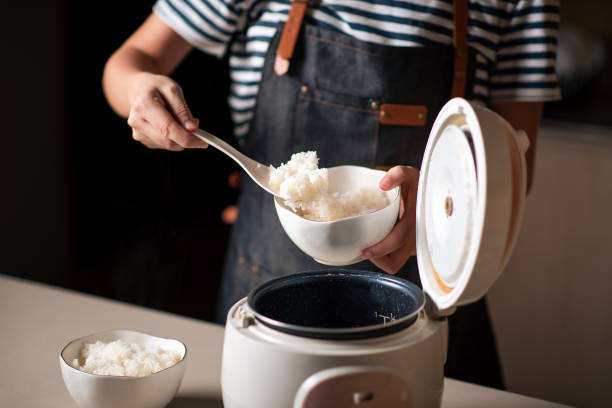
Features to Look for in a Rice Cooker
Non-stick inner pot
A high-quality non-stick inner pot makes cleaning faster and reduces rice sticking or scorching. This is especially valuable in busy kitchens where efficiency and turnaround time between uses matter.
Multiple cooking functions
Advanced rice cookers offer preset programs for white rice, brown rice, porridge, and steaming. These functions expand menu capability while ensuring consistent results across different rice types.
Capacity options
Rice cookers are available in a range of capacities to suit different needs, from small batches for low-volume service to larger units designed for catering operations. Selecting the right size helps avoid waste while ensuring adequate output during peak periods.
Keep-warm setting
A reliable keep-warm function allows rice to be held at serving temperature without compromising texture or quality. This feature is particularly useful in fast-paced environments where timing and service flow can vary.
Smart technology
Premium models may include smart features such as induction heating and digital timers. These technologies automatically adjust cooking parameters to deliver optimal results, even when ingredient quantities or conditions change. For instance, the Pro.equip Digital Rice Cooker offers preset cooking programs with an automatic keep-warm function. Its heated lid and micro-pressure cooking distribute heat evenly to produce perfectly cooked rice.
Durability and design
Durable construction, such as stainless steel housings, supports long-term use in demanding settings. A compact footprint and clean design also make the rice cooker easier to integrate into modern kitchen layouts. The Pro.equip Traditional Rice Cooker has a user-friendly design with a one-touch cooking option and an automatic keep-warm function. The vertical stainless lid design makes it easy to store, even with limited counter space. Its stainless steel material makes it resistant to stains, and the bowl is easy to clean. Approved by the SAA, the rice cooker meets strict safety and electrical standards.
How to Make Consistent Rice
Step 1: Measure the rice accurately
Use the measuring cup supplied with the rice cooker to portion rice correctly. Consistent measurement is critical to achieving uniform texture and preventing under or overcooking.
Step 2: Rinse thoroughly
Rinse the rice under cold water until the water runs clear. This removes excess surface starch, resulting in fluffier, better-separated grains after cooking.
Step 3: Add the correct amount of water
Add water according to the markings inside the inner pot or follow a 1:1 ratio for white rice, unless otherwise specified.
Step 4: Select the appropriate cooking function
Choose the correct setting based on the type of rice being prepared, such as white, brown, or porridge. Using the right program ensures the cooker applies the correct time and temperature profile.
Step 5: Allow the rice to rest
Once cooking is complete, let the rice sit on the keep-warm setting for 5 to 10 minutes. This resting period allows moisture to redistribute evenly throughout the rice.
Step 6: Fluff and serve
Gently fluff the rice with a rice paddle before serving. This separates the grains and releases excess steam, delivering optimal texture and presentation.
Conclusion
Rice cookers simplify one of the most fundamental kitchen tasks while significantly improving consistency, efficiency, and output quality. By automating the cooking process, they reduce manual oversight, minimise errors, and support reliable results across every batch, making them a valuable asset in both domestic and commercial environments.
For those looking to enhance kitchen performance, investing in the right rice cooker is a practical next step. Explore options such as the Pro.equip Rice Cooker range to find a model that aligns with your cooking volume, operational needs, and service expectations.