Hospitality businesses are now leaning more towards making their venues more flexible. They want a space that could offer a breakfast buffet in the morning, transition to à la carte service for lunch, and host a plated event in the evening.
As service styles continue to evolve, food presentation must keep pace. The most effective solutions are no longer those designed for a single purpose, but those that adapt seamlessly from buffet to plated dining without compromising on style or function.
Rather than investing in separate presentation systems for every service type, many hospitality operators are rethinking how the same serving solutions can work harder across multiple dining settings.
The Shift Between Dining Formats
Changes in guest expectations, staffing models, and operating costs have pushed venues to become more flexible. Buffets are being refined into curated self-serve experiences, while à la carte dining is increasingly influenced by visual storytelling and presentation consistency. Hotels, restaurants, and caterers now require servingware that can move fluidly between formats without appearing mismatched or overly casual.
This shift has placed greater emphasis on adaptable presentation—pieces that feel equally at home on a buffet counter or as part of a composed plated dish.
One Solution, Multiple Applications
Well-designed serving solutions are defined less by how they’re used and more by how they’re styled. Melamine trays, for example, can frame a shared buffet display just as effectively as it can support a chef-plated entrée. Risers that elevate food in a self-serve environment can also be used behind the scenes to streamline pass plating or enhance visual balance on a service counter.
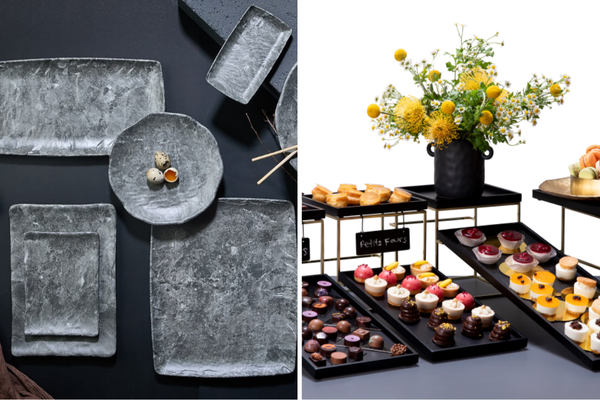
The key is choosing designs that don’t visually lock themselves into one dining format. Clean lines, natural finishes, and timeless materials allow pieces to transition without drawing attention to the change in service style.
Key Elements of Flexible Food Presentation
Adaptability often comes down to a few essential design principles. Modular systems such as Modulite™ Tables and Carts allow components to be rearranged or scaled up and down depending on service needs. Materials that are durable yet refined bridge the gap between casual and fine dining. Proportion also plays an important role, serving pieces that are not oversized for buffets tend to feel more intentional when used for plated or assisted service.
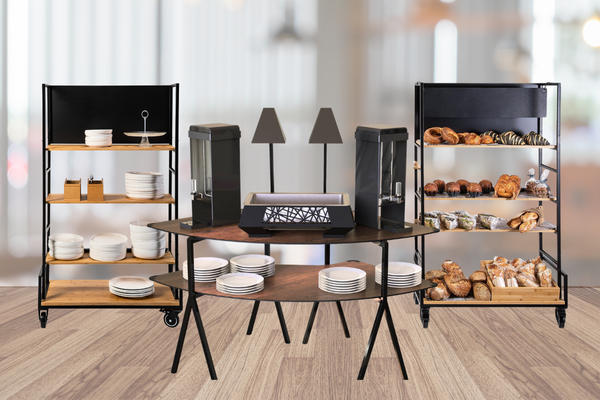
When these elements come together, presentation becomes cohesive rather than segmented by service type.
From Self-Serve to Plated Dining
Many buffet components naturally lend themselves to plated or assisted service when reimagined. Bowls used for shared displays can become vessels for composed dishes. Display stands used to create height on a buffet can support chef stations or plating lines. Even condiment and garnish holders can transition from guest-facing counters to kitchen pass setups, maintaining visual continuity from preparation to presentation.
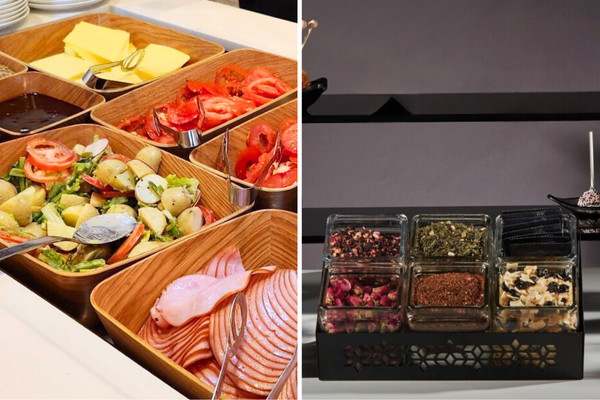
This continuity not only improves efficiency but also reinforces a venue’s identity across different dining moments.
Balancing Practicality and Aesthetics
While appearance is critical, hospitality presentation must always work in real-world conditions. Pieces need to be easy to handle, clean, and store, while still elevating the dining experience. Flexible presentation solutions strike this balance by offering durability without sacrificing design, allowing teams to move quickly while maintaining a polished look.
When form and function align, presentation enhances service rather than complicating it.
Why Flexibility Matters for Modern Hospitality
Investing in adaptable food presentation is as much a business decision as it is a design choice. Flexible solutions reduce the need for duplicate inventory, support evolving service models, and ensure consistency across dining formats. They also future-proof venues against changes in trends, guest expectations, and operational demands.
In an industry where versatility is increasingly essential, presentation should never be a limiting factor.
Adaptability is a Must in 2026
From buffet to à la carte, food presentation should evolve effortlessly with the dining experience. By choosing serving solutions designed for flexibility, hospitality venues can deliver visual consistency without sacrificing operational efficiency, no matter how the menu or service style changes. Top Shelf Concepts helps hospitality venues achieve elevated guest experiences by providing food presentation solutions that works across every setting, today and well into the future.