
Transporting hot food is about more than getting it from one place to another. It needs to stay safe to eat, look appealing, and arrive at the right serving temperature. Hot food should be kept above 60°C during transport to reduce the risk of harmful bacteria growing. If food sits in the temperature danger zone between 5°C and 60°C for too long, it can become unsafe to serve. That's why it's important to plan and learn how to keep food at safe serving temperatures during transport.
How to Keep Food at Safe Serving Temperatures During Transport
Keeping hot food above 60°C during transport is essential for food safety and quality. For every catering event or delivered meals, following good transport practices helps reduce food safety risks.
- Keep food out of the temperature danger zone. Bacteria can multiply quickly between 5°C and 60°C, so hot food should stay above 60°C until served.
- Follow HACCP procedures. Check temperatures before transport, monitor them during longer journeys, and keep transport times as short as possible.
- Avoid common mistakes. Opening carriers too often, using poorly insulated containers or leaving food sitting before departure can cause temperatures to drop.
- Use good transport practices. Preheat insulated containers, load food immediately before departure, and plan delivery routes to minimise travel time.
- Choose the right equipment. Insulated pan carriers help retain heat during transport, making them a practical solution for caterers, hospitals, schools, hotels and aged care providers.
7 Common Food Transport Mistakes Hospitality Businesses Make
Even well-prepared food can lose quality or become unsafe if it isn't transported correctly. These are some of the most common mistakes to avoid.
- Overfilling pans: Filling pans too high can lead to spills and uneven heat retention. Leave enough space for lids to fit properly and heat to circulate.
- Opening lids too often: Every time a lid is opened, heat escapes. Only open carriers when necessary and close them again as quickly as possible.
- Using the wrong containers: Standard food containers are not designed to keep food hot for long periods. Use containers that are suitable for transporting hot food.
- Poor stacking: Stacking containers incorrectly can block lids from sealing properly or damage packaging. Pack carriers carefully so they remain stable during transport.
- Transporting food too early: The longer food is spent in transit, the greater the chance of it losing heat. Cook and pack food as close to delivery or service time as possible.
- Not checking temperatures: Don't assume food is still at a safe temperature when it arrives. Use a calibrated food thermometer to check temperatures before departure and on arrival where required.
- Using non-insulated containers: Non-insulated containers lose heat quickly, especially on longer journeys. Insulated pan carriers are designed to help maintain safe serving temperatures and protect food quality during transport.
What Equipment Do You Really Need for Mobile Catering?
Having the right equipment makes it easier to transport food safely, stay organised and serve meals efficiently. These are the essentials every mobile catering operation should consider.
- GN pans: Gastronorm (GN) pans are the industry standard for preparing, storing and transporting food. They fit neatly into compatible transport equipment and help keep food organised.
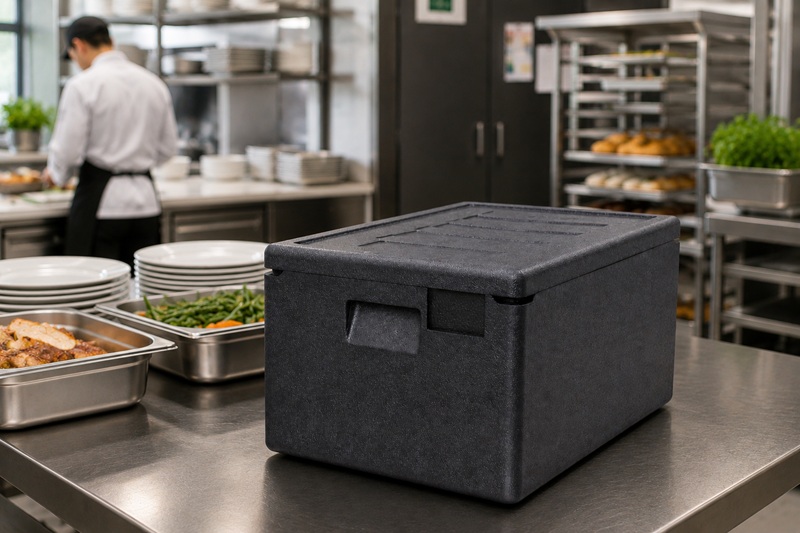
- Insulated pan carriers: An insulated pan carrier is one of the best ways to maintain safe serving temperatures during transport. The Pro.cooker Insulated Pan Carrier holds GN pans securely and features insulated walls that help retain heat, making it ideal for caterers, aged care facilities, hospitals, schools and hotels.
- Beverage dispensers: Insulated beverage dispensers help keep tea, coffee, soup and other hot drinks at serving temperature while making them easy to transport and dispense.
- Serving equipment: Tongs, serving spoons, ladles and portioning utensils allow staff to serve food hygienically and consistently once they arrive on site.
- Transport trolleys: Moving heavy food carriers by hand can be difficult and increase the risk of spills. Transport trolleys make it easier to move food safely between kitchens, vehicles, and serving areas.
- Temperature probes: A calibrated food thermometer is essential for checking that food remains above 60°C before departure and on arrival. Regular temperature checks also support food safety compliance and HACCP procedures.
FAQs
How do you safely transport cooked food?
To transport cooked food safely:
- Keep hot food above 60°C until it is served.
- Use insulated food carriers to help maintain temperature.
- Minimise the time food is spent in transit.
- Check food temperatures with a calibrated probe before serving.
- Follow your business's HACCP food safety procedures.
How do you travel with food safely?
Safe food transport starts with good preparation. Pack food in suitable containers, secure it to prevent spills and avoid opening carriers during transport. Plan your route to reduce travel time and maintain safe food temperatures from the kitchen to the serving point.
What is the best way to transport hot food?
The best way to transport hot food is to use insulated pan carriers with compatible GN pans. These help retain heat during transport and protect food quality. Combined with temperature checks and efficient delivery planning, they help ensure food arrives hot, safe and ready to serve.
What are the 5 basic food safety rules?
- Keep food and hands clean: Wash hands thoroughly and regularly clean and sanitise food preparation surfaces and equipment.
- Separate raw and cooked food: Keep raw meat, poultry and seafood away from cooked and ready-to-eat foods to help prevent cross-contamination.
- Cook food thoroughly: Make sure food reaches a safe internal temperature to reduce harmful bacteria.
- Keep food at safe temperatures: Keep cold food at 5°C or below and hot food at 60°C or above.
- Use safe ingredients and water: Check food quality, storage conditions and use-by dates, and always use clean, safe water when preparing food.
What is the danger zone for food?
The food temperature danger zone is between 5°C and 60°C. Within this range, bacteria that can cause foodborne illness can grow quickly, particularly when food is left at these temperatures for extended periods. To reduce food safety risks, potentially hazardous food should generally be kept at 5°C or below when cold, or at 60°C or above when hot. Temperature probes, appropriate refrigeration, and insulated food transport equipment can help businesses monitor and maintain safe food temperatures.