Walk into almost any high-performing commercial kitchen in Australia and you'll find a combi oven at the centre of it. They bake, steam, roast, and cook with precision, all in one unit. But with so many different models, sizes, and price points available in Australia, choosing the right one takes more than a quick browse.
This guide covers everything you need to make a confident decision: cooking modes, size and capacity, gas vs electric, boiler vs boilerless, leading brands, combi oven prices, and what to expect from installation and maintenance.
What are Combi Ovens?
A combi oven (short for combination oven) combines three cooking methods in a single appliance: convection heat, steam, and a combination of both. Unlike a standard convection oven or a dedicated steam oven, a combi steam oven gives you precise control over both temperature and humidity throughout the cooking process.
This flexibility makes commercial combi ovens a standout choice across hospitality, healthcare, education, catering, and quick service restaurants. You get the versatility of multiple kitchen appliances without taking up multiple footprints on your floor.
Browse our full range of commercial combi ovens.
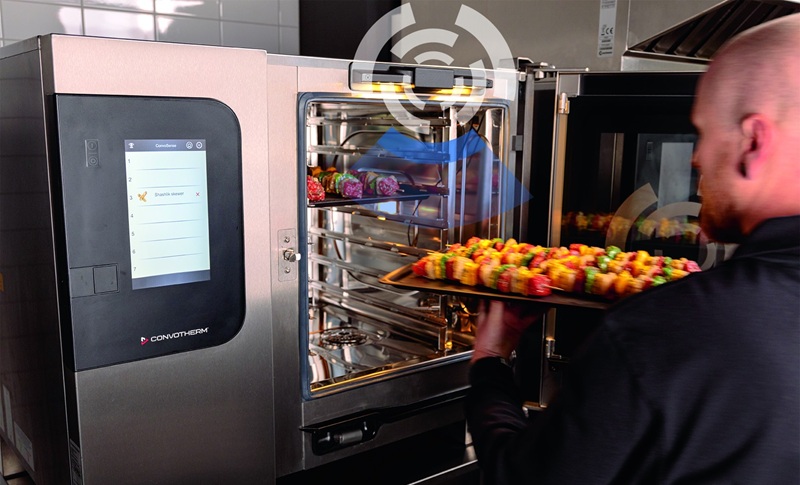
How Do the Cooking Modes Work in Combi Ovens?
Understanding the three cooking modes helps you get the most out of your combi oven.
- Convection mode: Hot air circulates around the oven cavity, much like a traditional convection oven. Ideal for baking bread, pastries, and achieving crispy roasted finishes on proteins. No steam injection occurs in this mode.
- Steam mode: The steam function introduces moisture into the cavity, making it perfect for vegetables, fish, rice, and dishes where you want to retain nutrients and avoid drying out. Some models support sous vide-style cooking in this mode using precise temperature control.
- Combination mode: This is where the magic happens. Dry heat and steam work together, allowing chefs to cook large quantities of food quickly without sacrificing quality. You can roast meat to perfection or regenerate pre-cooked meals with consistent results. The combination mode is what separates a combi steam oven from every other piece of cooking equipment in the kitchen.
Why Use a Combi Oven in a Commercial Kitchen?
The best combi oven pays for itself over time. Here's why so many foodservice operations across Australia rely on them:
- Multiple cooking functions: Replace your convection oven, steamer, and in some cases your grilling setup with one multifunctional appliance.
- Consistent results: Programmable settings mean every dish is cooked to the same standard, regardless of who is behind the pass.
- Faster throughput: Combination cooking accelerates the cooking process without drying out the food, so you can turn tables faster or batch-cook more efficiently.
- Energy efficiency: Shorter cook times and precise temperature management reduce energy consumption compared to running multiple appliances.
- Reduced labour: A combi oven with automatic cleaning means less time scrubbing at the end of a shift. Most models are easy to use with touch screen interfaces and programmable recipe storage.
- Stainless steel construction: Built for the demands of professional kitchens, with durable finishes designed to last.
How to Choose the Right Combi Oven Size for Your Operation
Choosing the right size is one of the most important decisions you'll make. Too small and you'll bottleneck your kitchen at peak service. Too large and you're wasting energy and floor space.
Combi ovens are sized by the number of GN (Gastronorm) trays they hold. Here's a quick reference:
| Model Type |
Tray Capacity (GN 1/1) |
Typical Application |
| Mini / Compact |
3-6 trays |
Cafés, coffee shops, small kitchens, front-of-house |
| Countertop / Benchtop |
6-12 trays |
QSR, food trucks, mid-volume kitchens |
| Mid-range Floor |
12-20 trays |
Busy restaurants, healthcare, school canteens |
| Large Floor |
20-40 trays |
Hotels, high-volume catering, industrial operations |
A note on tray spacing: Check the rack pitch (distance between shelves) in any model you're considering. Standard GN 1/1 trays need a minimum 68mm pitch. If you're cooking tall products like whole chickens or larger baked goods, look for adjustable or wide-pitch models.
Compact combi ovens are a popular choice for café environments and smaller venues where bench space is at a premium but cooking versatility is still essential. For industrial combi oven applications like large hospitals, schools, or high-volume catering operations, floor-standing models with 20 trays or more are the practical choice.
Gas vs Electric Combi Ovens
One of the first practical decisions to make is whether your operation needs a gas or electric model. Both are widely available across Australia, and each has genuine advantages depending on your setup.
| Feature |
Gas Combi Oven |
Electric Combi Oven |
| Running cost |
Lower in most AU states (gas is cheaper per kJ)
|
Higher, but improving with efficient models |
| Installation cost |
Requires gas connection and compliance work |
Standard three-phase power connection |
| Heat-up speed |
Very fast |
Slightly slower, but consistent |
| Environmental impact |
Higher emissions from gas combustion |
Lower emissions, particularly where renewable energy is available |
| Best suited to |
High-volume, established commercial kitchens with existing gas infrastructure |
New builds, healthcare, education settings |
The practical takeaway: If your site already has a gas connection and you're replacing an existing gas unit, a gas combi oven typically offers lower ongoing costs. If you're fitting out a new kitchen or operating in a sustainability-conscious environment, electric is increasingly the smarter long-term choice, particularly as energy grids become cleaner.
Check your local gas and electricity tariffs before deciding. Your Reward Hospitality equipment specialist can help you work through the numbers.
Boiler vs Boilerless Combi Ovens
This is a question that comes up constantly in professional kitchens, and the answer depends on how you plan to use the oven.
Boiler (steam generator) combi ovens
These use a dedicated internal boiler to heat water and generate steam, which is then injected into the cooking cavity. Because steam is produced separately and circulated by a fan, boiler models can deliver 100% steam almost instantly across the entire cabinet. They perform exceptionally well in pure steam cooking scenarios and support super-heated steam when convection heat is introduced.
The trade-off is maintenance. Boiler models have more components, use more water, and require regular descaling to prevent mineral build-up, which is particularly important in areas with hard water.
Boilerless (steam injection) combi ovens
Instead of a separate boiler, these models spray cold water directly onto the heating element to produce steam. There's no reservoir or secondary heating system, which means fewer parts to service, lower water consumption, and generally lower maintenance costs.
Boilerless models are ideal for operations that primarily use the combination mode rather than full steam mode. They're the preferred choice for many mid-volume venues and have grown significantly in popularity across Australian foodservice.
| Feature |
Boiler |
Boilerless |
| Steam delivery speed |
Very fast, high capacity |
Adequate for most applications |
| Water consumption |
Higher |
Lower |
| Maintenance frequency |
More regular (descaling required) |
Lower |
| Best for |
High-volume steam cooking |
Combination cooking, mid-volume |
| Typical price range |
Higher |
Lower to mid-range |
Leading Combi Oven Brands Available in Australia
The Australian market has strong representation from several global brands. Here's what each brings to the table.
Rational
The Rational combi oven is widely regarded as the benchmark in professional kitchens. The iCombi Pro and iCombi Classic series offer exceptional cooking intelligence, automatic humidity management, and self-cleaning cycles that rival any brand. Rational combi oven prices are at the premium end of the market, but for high-volume operations, the ROI is clear. Rational also provides comprehensive training support and a strong service network across Australia.
UNOX
UNOX has become one of the most respected brands in the Australian market, particularly for mid-range commercial combi ovens. The CHEFTOP MIND.Maps series features Wi-Fi connectivity, programmable recipes, and an intuitive touch screen interface. UNOX combi ovens deliver innovative features at a more accessible price point than Rational, making them a go-to choice for restaurants, cafés, and catering operations. We stock an extensive selection of UNOX combi ovens, offering a wide variety of options to suit every commercial kitchen.
Convotherm
Convotherm (now part of the Welbilt/Ali Group family) is known for its advanced cleaning system and steam generation performance. The Convotherm 4 series offers intuitive controls and automatic cleaning that keeps downtime to a minimum. A strong choice for healthcare and education environments where hygiene compliance is non-negotiable.
Hobart
Hobart combi ovens are trusted in foodservice and institutional settings for their robust build quality and reliability. Hobart is a well-known name across Australian commercial kitchens and pairs well with other Hobart equipment on the floor.
Turbofan
Turbofan offers a practical entry point into combi cooking for smaller operations. While not as feature-rich as the premium brands, Turbofan models are practical, durable, and easy to use, making them a solid choice for cafés and QSR environments.
Smeg
Smeg professional combi ovens combine functionality with considered design. Available in compact and mid-range sizes, Smeg is a popular option for venues where kitchen aesthetics matter alongside performance.
Invoq
Invoq sits in the mid-to-premium segment and offers strong combination cooking performance with a focus on even cooking results and operator simplicity.
Combi Oven Price Guide — What to Expect in Australia
Combi oven prices vary significantly based on size, steam generation type, brand, and features. Here's a general guide to help you budget.
| Category |
Approximate Price Range (AUD ex GST) |
| Compact/mini models (3–6 tray) |
$3,000 – $8,000 |
| Benchtop models (6–12 tray) |
$6,000 – $15,000 |
| Mid-range floor models (12–20 tray) |
$12,000 – $25,000 |
| Large floor models (20–40 tray) |
$20,000 – $60,000+ |
| Rational combi oven price (entry) |
From approx. $10,000 |
| Rational combi oven price (large) |
$30,000 – $60,000+ |
Prices fluctuate based on supplier, configuration, and current promotions. Reward Hospitality offers trade account pricing for approved businesses, which can deliver meaningful savings on equipment purchases. Finance solutions are also available for those looking to spread the cost.
Always factor in installation costs, connection work (gas or electrical), and an extended warranty when calculating the total cost of ownership.
Installation and Maintenance Requirements
Buying the oven is only part of the investment. Getting installation and ongoing maintenance right protects your equipment and your output.
Installation
- Most combi ovens require a three-phase power connection (electric models) or a certified gas connection with a regulator.
- Adequate ventilation and extraction are essential. The oven needs to be positioned under a canopy hood or connected to a direct extraction system.
- Water supply and drain connections are required on all models. Water quality matters. Areas with hard water (Perth, regional WA, inland QLD, parts of NT and SA*) should consider a filtration or softening system to protect internal components.
- Allow sufficient clearance around the unit for heat dissipation and servicing access. Check the manufacturer’s specifications before finalising placement.
- For floor-standing models, ensure the floor can support the weight and that door-swing clearance is accounted for.
Maintenance
Keeping your combi oven in good condition directly affects food quality, energy efficiency, and equipment lifespan. Key tasks include:
- Daily: Run the automatic cleaning cycle at the end of each service. Most models offer programmable cleaning modes with varying intensity.
- Weekly: Inspect door seals, fan blades, and drain filters. Clear any food debris from the cavity and check the door gasket for wear.
- Monthly: Check and clean the steam injection nozzles or boiler elements. Descaling frequency depends on your water hardness. In hard water areas, descaling may be required weekly.
- Annually: Book a qualified technician for a full service, including checking electrical connections, water inlet valves, and the cleaning system. Always use a technician familiar with the brand you're running.
A good warranty from a reputable supplier is your safety net. Rational, UNOX, and Convotherm all offer strong warranty support across Australia, confirm terms at point of sale and keep documentation accessible.
Who Uses Combi Ovens? Industry Applications
Commercial combi ovens are genuinely cross-industry equipment. Here's how different sectors use them:
- Hospitality and restaurants: High-volume cooking across multiple cooking methods. Combination mode for roasting, convection for pastries, steam for vegetables and fish.
- Healthcare: Regeneration of pre-cooked meals in hospitals and aged care facilities. The ability to cook large quantities at precise temperatures ensures food safety compliance.
- Education: School canteens and university catering use mid-to-large floor models for batch cooking across a varied daily menu. Easy-to-use interfaces support kitchen staff of all skill levels.
- Catering: Portable and mid-range models support off-site catering setups. Programmable recipes allow consistent output when cooking away from a main production kitchen.
- QSR: Compact combi ovens and benchtop models suit smaller menus with high throughput requirements, particularly for heated food items, pastries, and grab-and-go offerings.
Why Buy Your Combi Oven from Reward Hospitality?
Whether you're fitting out a new commercial kitchen, upgrading, or expanding, Reward Hospitality has the right combi oven for your operation. We stock leading brands, including Rational, UNOX and Convotherm, so you can compare and choose with confidence.
Our equipment specialists are on hand to help you match the right unit to your kitchen, service volume, and budget, whether you're outfitting a small café or a large industrial operation. Trade account holders unlock exclusive pricing, and finance solutions help spread the cost of a significant equipment purchase. With distribution and stores across Australia, plus free metro delivery on orders over $200, getting the right combi oven has never been more straightforward.
Browse our full combi oven range online or speak to a specialist today. Take the first step towards a faster, smarter, more consistent kitchen.
FAQs
What is the difference between a combi oven and a steam oven?
A steam oven only cooks using steam. A combi oven adds convection heat and combination mode to the mix, giving you far more cooking flexibility in a single unit.
How much does a combi oven cost in Australia?
Combi oven prices in Australia range from around $4,000 for compact models up to $80,000 for large floor-standing industrial combi ovens from premium brands. High-quality entry-level models typically range from $7,000 to $15,000.
Are combi ovens worth it?
For most commercial kitchens, yes. A combi oven replaces multiple appliances, reduces cooking times, and delivers consistent results across an entire service. The upfront cost is higher than that of a standard convection oven, but long-term savings on labour, energy, and food waste typically justify the investment, particularly for high-volume or varied menus.
What is the best countertop combi oven?
The best countertop combi oven depends on your volume and budget. UNOX and Convotherm are strong mid-to-premium choices, offering programmable modes and automatic cleaning in a benchtop footprint. For smaller cafés or QSR operations, Turbofan and Smeg deliver reliable performance at a more accessible price point.
Does a combi oven need a hood?
In most cases, yes. Australian health and building codes generally require commercial combi ovens to be installed under a canopy hood connected to a ventilation system. Some models offer condensation hoods for installations without a direct canopy, but always confirm requirements with your local council and a qualified installer before finalising placement.
Can I use a combi oven to reheat food?
Yes, and it's one of the most underutilised functions in busy kitchens. The combination mode reheats pre-cooked or chilled meals evenly without drying them out. This makes them particularly valuable in healthcare, aged care, and catering operations where batch cooking and portioned meal service are standard.
How long do commercial combi ovens last?
A well-maintained commercial combi oven typically lasts 10 to 15 years. Lifespan depends on usage frequency, cleaning consistency, and whether descaling and servicing are carried out on schedule. Premium brands like Rational and UNOX are built for long-term, high-volume use.
Can you cook different foods at the same time in a combi oven?
Yes. Most commercial combi ovens support multi-rack cooking, allowing different menu items to be cooked simultaneously. Advanced models from Rational and Invoq automatically adjust humidity and airflow by rack, so dishes with different moisture requirements can cook side by side without affecting each other.
What is the difference between a combi oven and a speed oven?
A combi oven uses convection heat and steam for precise, full cooking from raw. A speed oven combines convection with microwave energy to cut cook times dramatically, but suits finishing and rapid heating rather than full cooking. For large-volume, precision cooking, a combi oven is the right choice.
Are there combi ovens suitable for aged care and hospital kitchens?
Yes. Combi ovens are widely used in healthcare settings for their consistent, controllable results at scale. Programmable recipes, precise temperature management, and automatic cleaning support HACCP compliance. Floor-standing models with 20-plus tray capacity are well suited to the large-batch demands of hospital and aged care kitchens.