Choosing the right commercial washer and dryer is not simply a matter of buying the biggest machine you can fit.
The right size depends on how much laundry your business produces each day, what you are washing, how many hours you want your laundry operating, and whether your laundry volume is likely to grow.
1. Estimate how much laundry you produce each day
Start by estimating the dry weight of laundry your business generates on a typical busy day.
If weighing everything is impractical, laundry baskets can provide a useful starting point. As a rough guide, a standard basket of dry laundry may contain around 5 kg, although this will vary depending on the basket and the type of items inside it.
If your business generates around 10 baskets each day, you may be processing approximately 50 kg of dry laundry.
Size your laundry around a busy day so you have enough capacity when demand increases.

2. Decide how long you want your laundry operating
Daily laundry volume is only half the equation.
Two businesses might both process 60 kg of laundry each day but require very different equipment. One may be happy for its laundry to operate throughout an eight-hour shift, while another may want everything washed and dried within three or four hours.
The shorter the operating window, the more processing capacity you generally need. This may mean larger machines, multiple machines, or both.
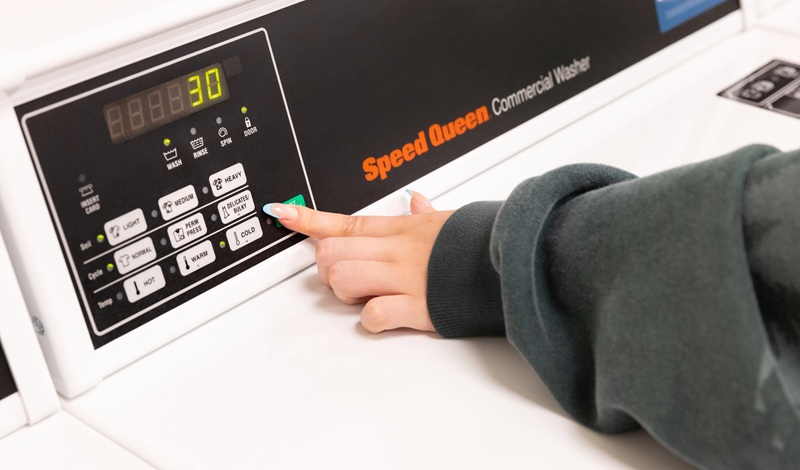
Cycle time is important here too. As a practical example, Speed Queen commercial washers will typically complete a load in around 30 minutes, with commercial dryers typically drying a load in under an hour, depending on the cycle, load and operating conditions.
The key question is not just “How much laundry do we have?” but also “How quickly do we need to process it?”
3. Convert your laundry volume into loads per day
Once you know your daily volume, divide it by the practical capacity of the washer you are considering.
Daily laundry volume ÷ practical load size = loads per day
For example: 60 kg of laundry ÷ 10 kg per load = approximately 6 loads per day
You can then consider whether those six wash and dry cycles will comfortably fit within your desired laundry operating hours.
Allow extra time for loading, unloading and transferring laundry.
4. Don't choose a machine based on kilograms alone
The stated kilogram capacity of a commercial washing machine is important.
However, towels, bedding and other bulky items may fill the drum before reaching the machine's maximum weight capacity.
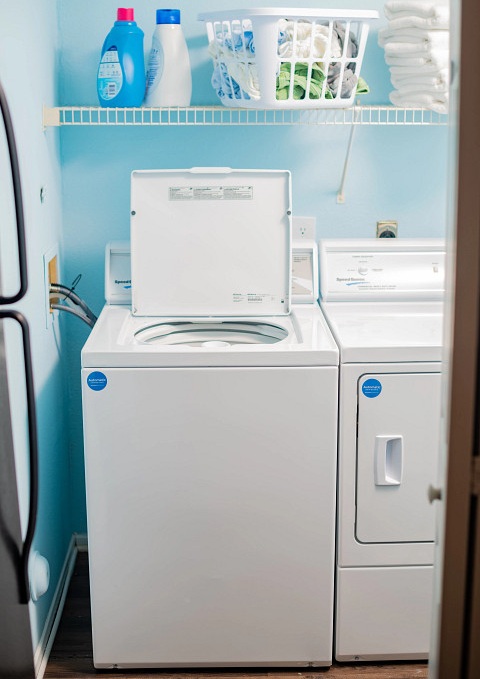
Practical capacity therefore depends on both the weight and bulk of the items you regularly wash.
This is particularly important for businesses such as accommodation providers, healthcare facilities, gyms and other operations that process large volumes of towels or bedding.
5. Your washer can affect how long drying takes
Drying capacity should be considered alongside washing capacity.
One advantage of a front-loading commercial washer is its ability to extract more water from the laundry during the final spin. The less moisture remaining in the load when it leaves the washer, the less water the dryer needs to remove.
This can help reduce drying times, shorten the overall laundry process and reduce the chance of the dryer becoming a bottleneck.
Dryers also require sufficient drum space for wet laundry to separate and tumble while heated air moves through the load. This means washer and dryer kilogram ratings should not necessarily be compared on a simple one-for-one basis.
The aim is to create a balanced system where the dryer can comfortably keep pace with the washer.
6. One larger machine or multiple smaller machines?
A larger machine can reduce the number of loads required to process the same daily volume. Alternatively, multiple machines can process several loads simultaneously, shortening the total number of hours the laundry needs to operate.
For example, a business wanting to process its laundry quickly may benefit more from two machines running at the same time than from relying on a single machine throughout the day.
Available floor space also matters. Stacked commercial washer and dryer combinations can increase processing capacity without requiring the floor area of two separate machines.
7. Allow room for future growth
It is also worth considering what your laundry requirements could look like in several years.
Are you adding more rooms, increasing occupancy, expanding your facility or expecting customer numbers to grow?
If the proposed equipment will already be close to maximum capacity from day one, even modest growth could result in longer operating hours or the need for another equipment upgrade.
Allowing some spare capacity today can give your business room to grow and provide additional capacity for particularly busy periods.
A simple commercial laundry sizing checklist
Before choosing a commercial washer and dryer, consider:
- daily laundry volume in baskets or kilograms
- practical load size
- number of loads per day
- how many hours you want the laundry operating
- washer and dryer cycle times
- the type and bulk of textiles being processed
- washer extraction performance and its effect on drying
- available floor space
- power, water, drainage and ventilation
- expected future growth
Getting these factors right will help you choose a commercial laundry setup that can process today's workload efficiently while leaving enough capacity for the needs of your business tomorrow.