The world's natural resources are finite, yet our economic systems have traditionally been built around endless growth and consumption.
For generations, business success was measured almost exclusively by financial performance. Companies extracted resources, manufactured products, generated profits and expanded their operations. While this approach fueled innovation and economic development, it often overlooked a critical question:
What should be given back?
Increasingly, businesses are recognising that profit alone is no longer the only measure of success. Customers, employees and communities expect organisations to contribute positively to society and the environment, not simply minimise their impact.
This shift reflects a broader evolution in the way we think about responsibility.
Just as the circular economy challenges the traditional "take, make, waste" model of production, many organisations are beginning to rethink the role of business itself. Instead of treating profits as the end goal, forward-thinking companies are exploring how the value they create can continue to circulate, delivering benefits beyond the walls of the organisation.
In many ways, this can be viewed as a form of circular thinking.
Beyond the Bottom Line
The concept of the Triple Bottom Line, balancing people, planet and profit, is now firmly established within sustainability discussions. Yet for much of modern business history, social and environmental outcomes were often considered separate from commercial success.
Today, there is growing recognition that healthy businesses depend on healthy communities and thriving ecosystems.
Whether through environmental restoration, social programs, charitable giving or community partnerships, organisations are increasingly investing in initiatives that create value outside their immediate operations.
The goal is no longer simply to reduce negative impacts. It is to leave a positive legacy.
When Purpose Is Embedded from the Beginning
For some organisations, leaving a positive legacy represents a relatively new way of thinking. For others, it has always been part of the business.
When BioPak was founded in 2006, the company emerged from a desire to address a growing environmental challenge. Confronted by the scale of plastic pollution and the limitations of the traditional linear economy, BioPak founders sought to create packaging solutions that worked with natural systems rather than against them.
The mission was clear: to help remove plastic pollution from food systems and support the transition towards a more circular economy.
Now, twenty years later, that mission continues to guide the business, with circularity centred on the product lifecycle: designing packaging that can be composted, recycled or otherwise returned safely to natural systems rather than becoming waste.
Looking at businesses built around this kind of thinking, though, raises a broader question worth exploring. If materials can be designed to remain in circulation, could the same logic be applied to the wider value a business creates?
What Does Circular Impact Look Like?
At its core, circularity is about ensuring valuable resources don't become waste.
In packaging, this can mean designing products that can be reused, composted or recycled. Applied more broadly, it raises the possibility that business success itself could contribute to positive social and environmental outcomes rather than ending at the balance sheet.
BioPak's Give Back Fund, running since 2012, offers one example of what this can look like in practice.
Each year, 5% of profits are invested into initiatives focused on protecting the environment and supporting communities, a commitment the company has maintained every year since the program's inception. To date, more than $5.8 million has been directed towards environmental and charitable partners, with the total expected to exceed $6 million by the end of 2026.
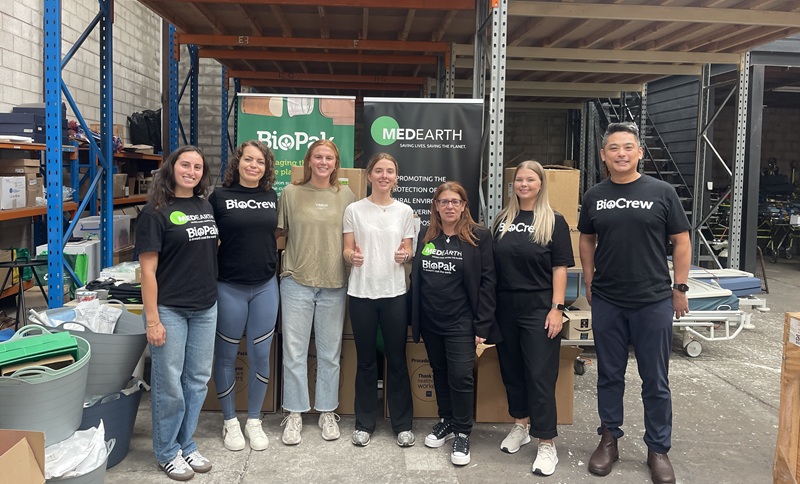
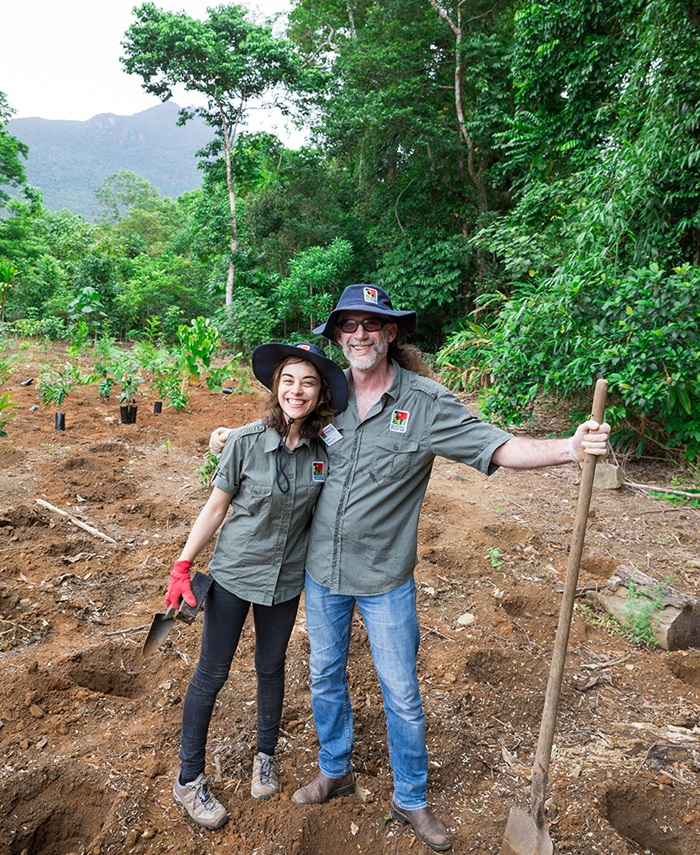
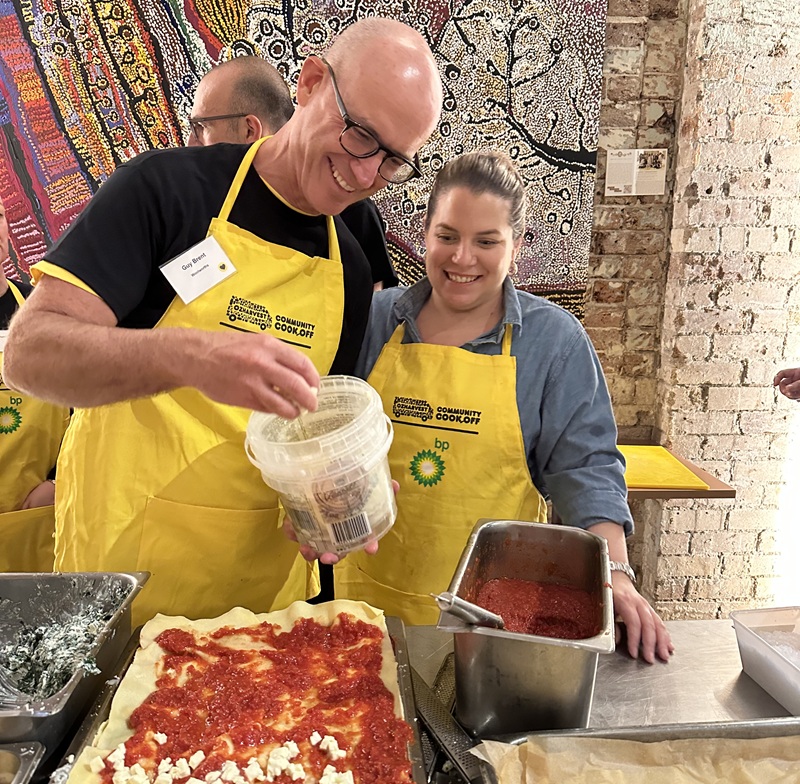
In 2025 alone, this included the donation of 463,924 meals through partnerships with OzHarvest, KiwiHarvest and Foodbank, helping address food insecurity across Australia and New Zealand. BioPak also supported the planting of 6,240 trees through Rainforest Rescue, contributing to the protection and restoration of the Daintree Rainforest. Through its partnership with MedEarth, surplus medical equipment was redirected from landfill and redistributed as humanitarian aid, creating benefits for communities that need it most.
These initiatives are diverse in their focus, but they are united by a common thread: business success creating value that continues to flow outward.
The Next Stage of the Circular Economy
Much of the conversation around circularity focuses on materials, packaging and waste reduction.
These are important and necessary changes.
But perhaps the next stage of the circular economy is broader. Perhaps it involves applying the same principles to the way businesses create and distribute value.
Rather than asking only how products can be returned to productive use, organisations can also ask how profits, knowledge, resources and influence can contribute to positive outcomes beyond the business itself.